
Saamuhika Shakti is a collective impact initiative, initiated and funded by the H&M Foundation, launched in 2020 to enable informal waste pickers to lead secure and dignified lives, with a specific focus on gender and equity.
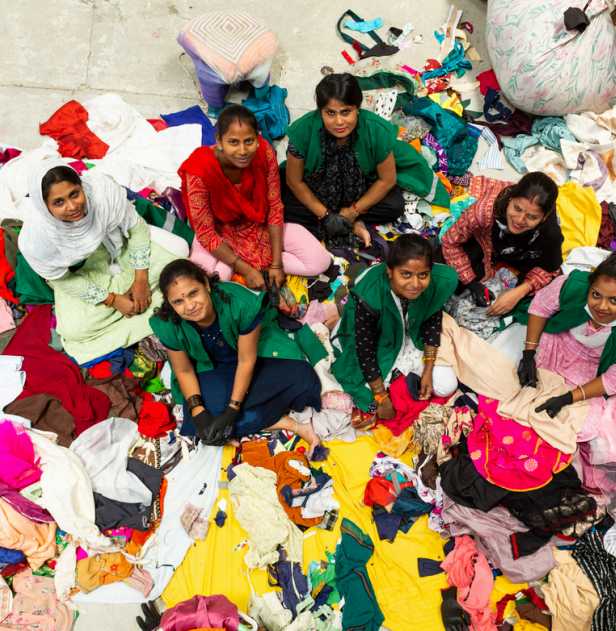
Source: Vinod Sebastian, Saamuhika Shakti
Over two phases and approximately USD 21 million in grant funding, the initiative has evolved from project-level interventions to an integrated, systems-oriented approach centred on sustainable livelihoods, essential services and ecosystem engagement.
This snapshot focuses on Phase 2’s Textile Recovery Facility (TRF) in Bengaluru, launched in August 2024 and operated by India’s first waste picker-turned-entrepreneur managing a TRF – a milestone that has since inspired other waste pickers to explore and establish similar TRFs of their own – with support from the Circular Apparel Innovation Factory and Hasiru Dala. The TRF operates on a hub-and-spoke model: textile waste is collected door-to-door across 14 residential wards and aggregated at Dry Waste Collection Centres before being sorted into distinct value streams, including second-hand resale, recycling, industrial felt production and upcycled utility products made by women waste pickers trained by the Sambhav Foundation.
The initiative demonstrates that inclusive circular models are operationally viable when worker agency, community voice and multi-stakeholder coordination are built into the design from the outset. It also illustrates the catalytic role that grant capital can play in proving models that commercial investors cannot yet justify on financial terms alone. By placing waste pickers at the centre of the value chain rather than at its margins, Saamuhika Shakti provides a replicable blueprint for how circularity can generate dignified livelihoods alongside environmental outcomes.