In October 2024, Time named UNICEF’s child-lens investing framework one of the best inventions of the year. This was an important development, as it put child-lens investing firmly on the radar of investors. But why apply a child lens, and how can investors do it effectively? Triodos’ Future Generations strategy offers a practical example.
Strategy
Triodos Future Generations Strategy focuses on small- and mid-cap equities that contribute to children’s wellbeing. The strategy combines active ownership, advocacy and a unique partnership with UNICEF to put children’s needs on corporate agendas.
| Attribute | Details |
| Manager | Triodos Investment Management |
| Fund/Product Name | Triodos Future Generations Fund |
| Status | Open-end sub-fund of Triodos SICAV I |
| Asset Class | Listed small- and mid-cap equities |
| Target Return | Equity market-like return |
| Target Sectors | Health & survival, Education, Protection, Clean environment, Equality & inclusion |
| Target Geography | Global |
| Time Horizon | Long-term |
Today’s children are tomorrow’s consumers, innovators and leaders – but their interests are often overlooked in economic decision-making. Short-term thinking in politics, business and finance contributes to global challenges like climate change, biodiversity loss and inequality. Adopting a forward-looking, child-focused investment approach ensures we leave a more equitable and sustainable world for future generations.
Applying a child lens to investing
For Triodos, it begins with a simple question: What world do we want future generations to inherit? Do you envision thriving rainforests, unspoiled coral reefs, and a planet where polar bears exist outside of zoos? If so, environmental sustainability is your key priority. But perhaps you also envision a world where children have access to healthy and nutritious food, have access to quality education and adequate healthcare. These are urgent challenges that children already face today. In our theory of change, we have articulated how these challenges can be addressed.
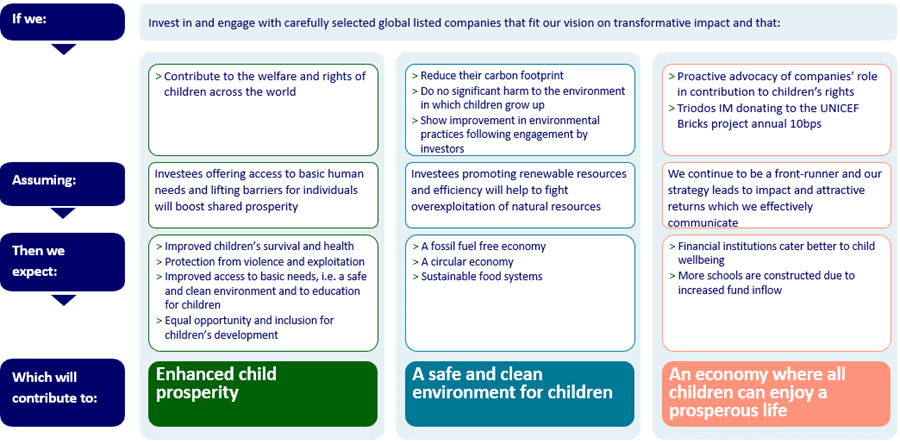
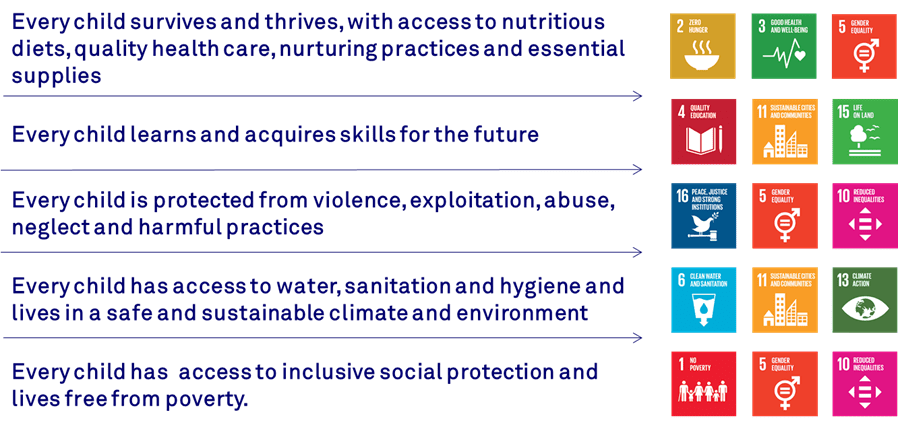
Triodos Future Generations Strategy is guided by UNICEF’s 2022–2025 strategic plan. They have translated its goals into investment themes that contribute to child wellbeing and offer an attractive return:
Measuring impact
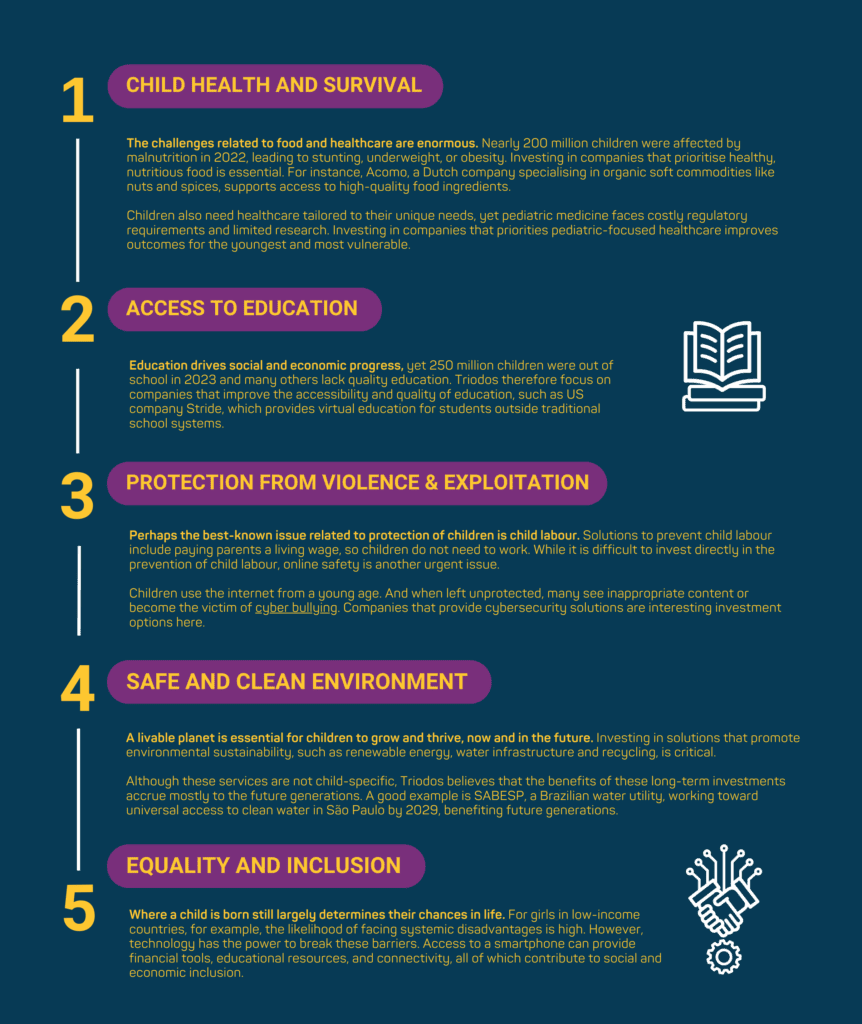
Triodos uses a proprietary framework to measure how investments contribute to the five child wellbeing themes. Key aspects include:
1. Comparing to a benchmark
- Portfolio impact is measured against the Bloomberg Small & Mid Cap Index
- The analysis looks at how the products and services of portfolio companies contribute to the five child wellbeing themes.
- Each theme is made up of specific impact objectives, which are linked to the UN Sustainable Development Goals (SDGs). Data for this analysis comes from ISS ESG.
2. Revenue contribution to child wellbeing
- The portfolio aims for at least 50% of revenue to contribute to these themes, ensuring a higher impact score and lower environmental footprint than the benchmark – it’s currently at 85% (based on their proprietary framework)
3. Active engagement
- Triodos engages with companies to encourage family-friendly work policies [link], such as parental leave and childcare support. These policies benefit employees and have positive effects on children’s wellbeing, creating both social and financial value.
- Triodos’ Impact Highlights below show the strategy’s overall impact.
The investment case
“Applying a child lens to investing is not only about social responsibility – it also makes financial sense. Investing in child-centric impact themes, such as food, healthcare, education and infrastructure means investing in essential services. This focus can create a resilient and diversified portfolio that is less susceptible to short-term macroeconomic fluctuations. Our Future Generations strategy proves this. It has lower volatility compared to the reference index. The beta is also well below one. Furthermore, applying a child lens results in a portfolio with different allocations. Whereas health care and consumer staples have a strong weight in the Future Generations portfolio, this is generally not the case for other impact strategies. This makes it complimentary to existing impact portfolios.”
As investors, we play a crucial role in shaping the world future generations will inherit. By applying a child lens to investing, we can move beyond short-term returns and focus on building a sustainable, inclusive, and thriving global economy.
This case study is provided for information only and should not be interpreted as constituting investment advice or any regulated activity. The information and figures provided are accurate as per the latest information publicly available and/or made available to the Impact Investing Institute for the purpose of this research at the time of publication